


Thanksgiving is this Thursday, and the moment the pie plates are cleared, the calendar seems to shout “Christmas!” Decorations, shopping, visits, travel, church programs and phone calls can all arrive in one big rush. For older adults, and for the caregivers and adult children who help them, that sprint from turkey to tinsel can leave everyone tired and a little frazzled. The good news: a few small, gentle habits can make the change of seasons feel calmer, and leave more room to enjoy it.
Why the Season Shift Can Feel Like So Much
Late November changes a lot at once. Days are shorter, routines get shuffled, houses fill with guests and noise, and meals and bedtimes drift later than usual. Many people notice that when they’re tired, rushed or stressed, it’s harder to focus, keep track of plans or find the right word. Researchers have found links between sleep, stress and how sharp we feel day to day, so it makes sense to protect a little calm during the busiest weeks of the year.
The holidays can also stir up quieter feelings: missing someone who used to sit at the table, or feeling left out of the bustle. Both the busy and the bittersweet deserve a gentle pace.
Keep One Anchor in Every Day
An “anchor” is a small, familiar part of the day that stays the same no matter what else is going on. It might be a morning walk, coffee by the same window, a favorite radio program, or ten minutes with a puzzle before lunch. Familiar routines give the day a steady shape, and they can be especially reassuring for a loved one who finds big changes unsettling.
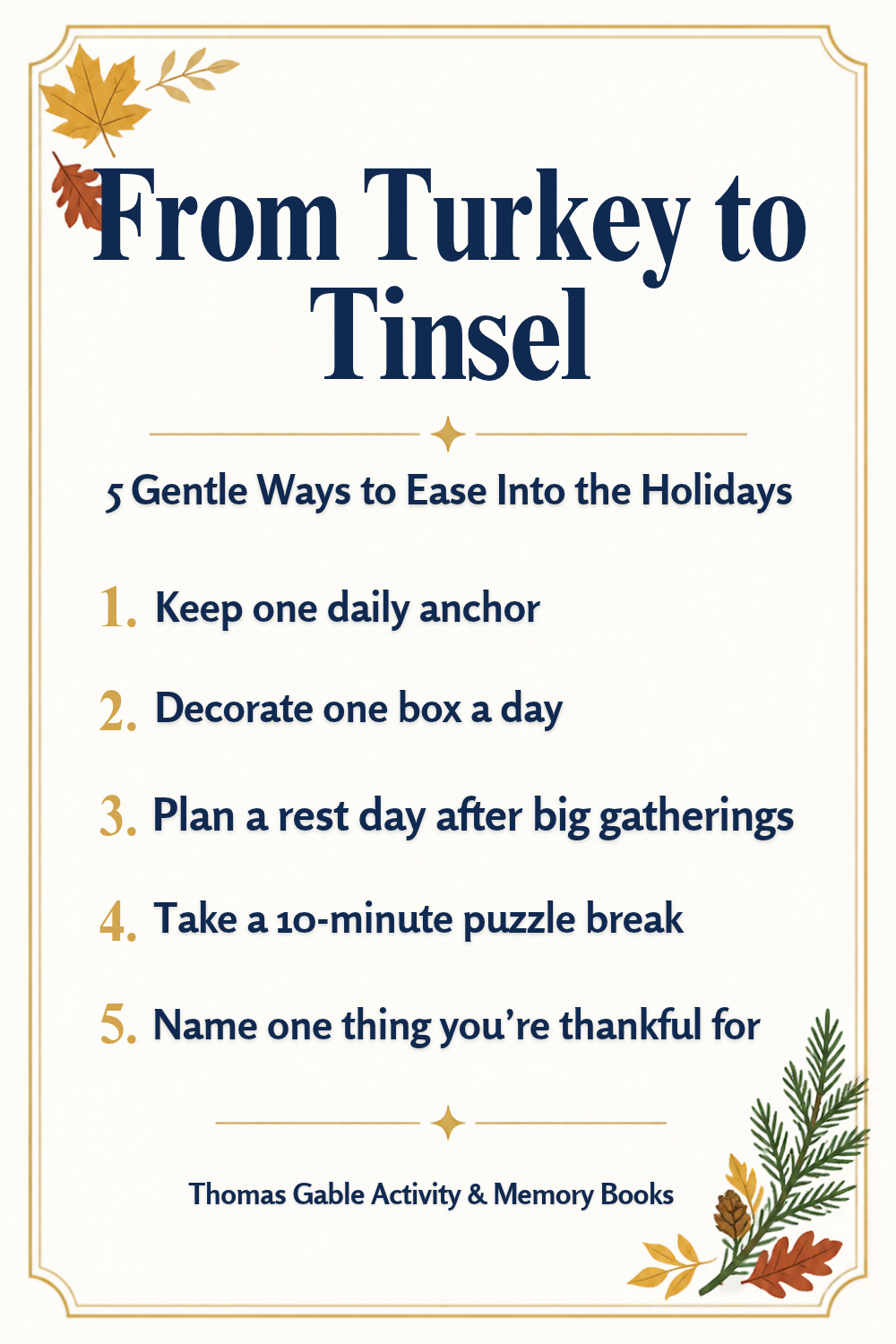
Pick your anchor now, before the week gets busy, and tell the family about it. “Grandpa does his puzzle after breakfast” is much easier to protect when everyone knows it’s part of the plan.
Pace the Hand-Off From Thanksgiving to Christmas
There’s no rule that the tree has to go up the morning after Thanksgiving. Spreading the change over a week or two keeps it from turning into one exhausting marathon. Bring out one box of decorations a day. Let the leftovers carry the meals for a couple of days so no one has to cook. Plan a true rest day after each big gathering, with no errands, no visitors and an early night.
Unpacking decorations slowly has a bonus: each ornament can become a story. Ask where it came from, who made it, or which house it hung in. Those small conversations are a lovely, low-pressure way to share memories.
Thanksgiving week pace planner
Pair every busy day with one calm anchor. Fill in your own in the last column.
| Day | The big thing | A calm anchor | My anchor |
|---|---|---|---|
| Tue–Wed | Shopping and cooking prep | A 10-minute puzzle with morning coffee | |
| Thanksgiving | The meal and visitors | A quiet corner to sit after dinner | |
| Friday | Leftovers and a slow start | Rest day: a short walk, no errands | |
| Saturday | First box of decorations | One box only, with ornament stories | |
| Sunday | Church, calls or visits | Usual bedtime, lights low early |
Make Room for Quiet at Gatherings
A full house is joyful, but it can also be loud and tiring, especially for someone with hearing or memory changes. Set up a “quiet corner” with a comfortable chair, good light, a lap blanket and something calm to do. Smaller groups, shorter visits and a predictable break after the meal can help everyone stay in good spirits. A simple shared activity, like working a word search side by side with a grandchild, gives people a way to be together without the pressure of nonstop conversation.
Caregivers need the same kindness. Trade off shifts, accept offers of help and step outside for a few minutes of fresh air. And if you notice changes in sleep, mood or memory that worry you, for yourself or a loved one, it’s worth talking with a doctor about them.
Try This Today: A 10-Minute Wind-Down
- Choose a regular time, like after lunch or before the evening news.
- Sit somewhere quiet with good light and your reading glasses close by.
- Do one small, absorbing task: a single puzzle, a page of a book or a short list of holiday memories.
- Take a few slow, comfortable breaths before you get up.
- Name one thing you’re thankful for today, out loud or on paper.
If you’d like a holiday puzzle for that quiet time, the Large Print Christmas Word Search for Adults, Challenge Edition has 100 roomy grids with themes such as Christmas in the 1950s, Toys of Christmas Past and Letters to Santa, and its answer key explains what every word means. It’s a nice way to let the Christmas spirit in one puzzle at a time.
However you spend these next few weeks, give yourself permission to go slowly. The season will still be there tomorrow, and a rested mind enjoys it more.

From Thomas Gable Activity & Memory Books, an imprint of Ripplebound Publishing
This post is for general interest and isn’t medical advice. As an Amazon Associate I earn from qualifying purchases.

