
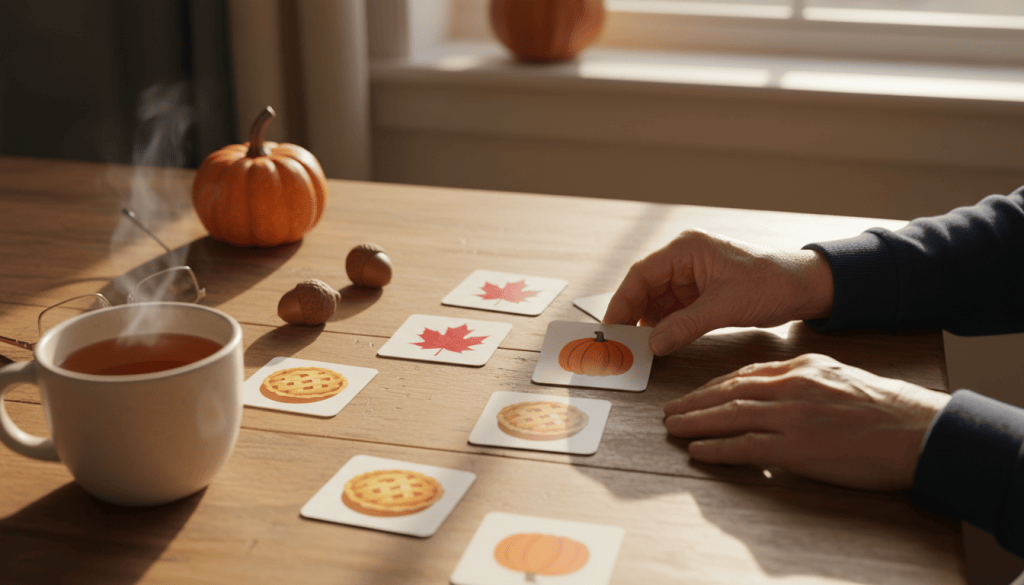
A pumpkin pie here, a pumpkin pie there. A turkey on one side of the page and its twin hiding in the corner. Matching games are one of the friendliest puzzles there is: no spelling, no math, just looking for two things that belong together. If you have never tried one, or you have tried and felt a little lost, this guide is for you. A few simple habits make matching games easier, calmer and a lot more fun.
We will practice with the Thanksgiving Memory & Recall Activity Book, Gentle Edition. It was made for exactly this kind of relaxed puzzling: one activity per page, simpler puzzles and a no-pressure pace, with picture searches, match games and nostalgic photos throughout.

Thanksgiving · Gentle Edition
Thanksgiving Memory & Recall Activity Book
- 100 large-print Thanksgiving activities
- One activity per page, at a relaxed pace
- Picture searches, match games and nostalgic photos
- Free online answer guide
What a matching game asks you to do
Every matching game comes down to one question: which two things go together? Sometimes the pairs are identical pictures. Sometimes a word goes with a picture, or a picture goes with its shadow. And in the classic memory version, the cards are turned face down and you try to remember where each one was. The skills are the same in all of them: looking carefully, noticing small differences and holding a picture in mind for a moment. Researchers who study attention have found that we notice more when we look with a purpose, and matching games give your eyes exactly that.
Here is a quick guide to the kinds you are most likely to meet:
| Type of game | What you match | Best first move |
|---|---|---|
| Picture pairs | Two identical pictures | Start with the most unusual picture |
| Word to picture | A word and the picture it names | Read every word once before you start |
| Shadow match | A picture and its outline | Look at the outer shape, not the details |
| Memory flip | Cards turned face down | Start with just four pairs |
The 5-step method
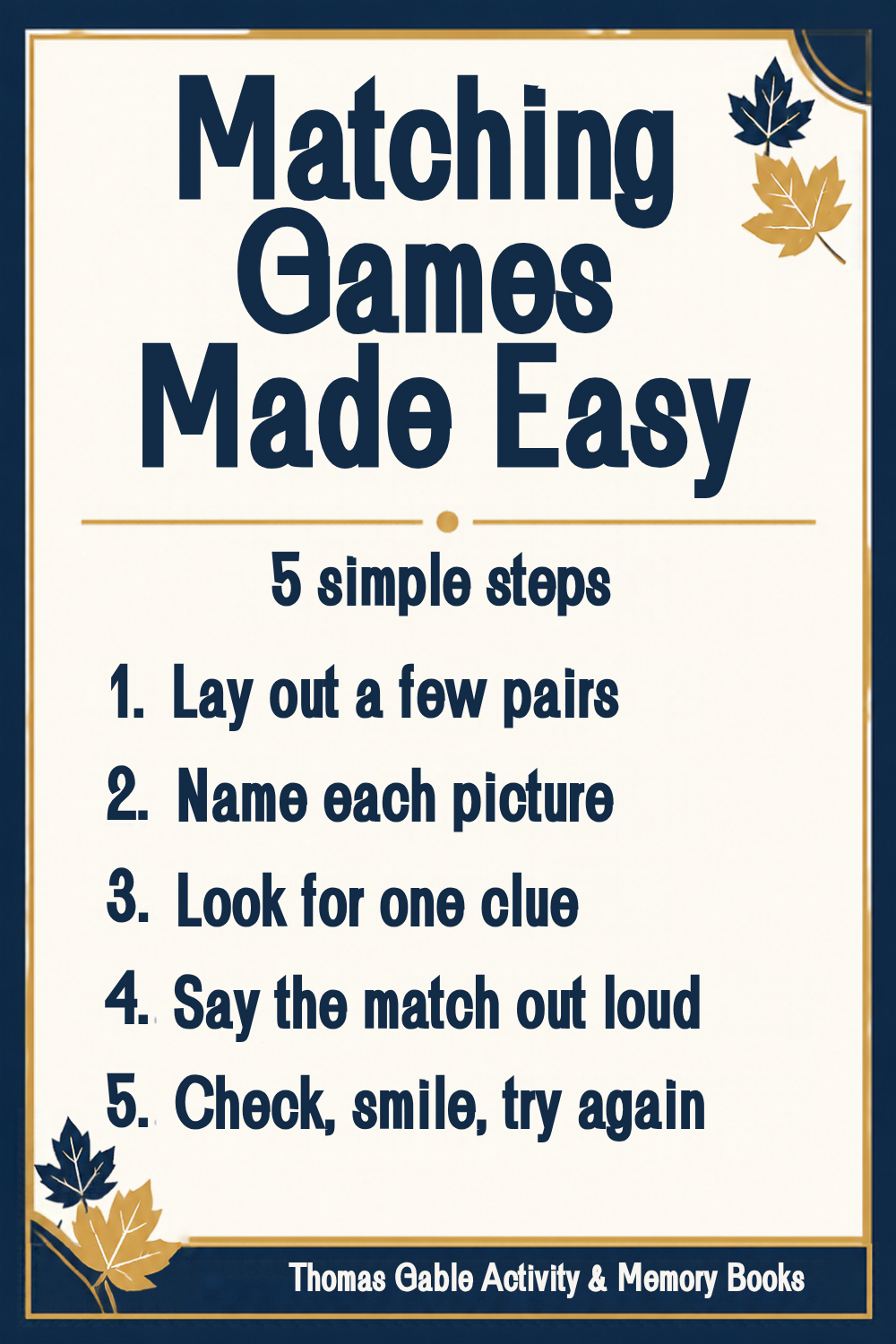
- Lay out a few pairs. If the page feels busy, cover half of it with a sheet of paper and work on one part at a time. Fewer choices make the first matches come quickly.
- Name each picture. Say it softly: “pie, turkey, acorn, corn.” Giving each picture a name gives your memory a second way to hold on to it.
- Look for one clue. Pick a single feature, like a color, a stripe or the way a leaf curls, and hunt for it. One clue at a time is easier than comparing whole pictures.
- Say the match out loud. “Pie goes with pie.” Then circle or check off both pictures so your eyes can skip them next time.
- Check, smile, try again. Compare your answers with the answer guide. A miss is just a clue for next time.
Make it a game for two
Matching games are wonderful to share. A grandchild can point while Grandma names the pictures, or two friends can take turns finding one pair each. Caregivers often find that a matching page is an easy way to sit side by side and chat, since there is no wrong way to help. Keep it light, cheer every match and stop while it is still fun.
Try this: Make your own memory flip game today. Cut eight squares of paper and draw four simple pairs: two pies, two leaves, two turkeys and two acorns (stick figures count!). Mix them up face down, then take turns turning over two at a time. When you find a pair, tell a quick story about it, like the best pie you ever ate.
When to take it slow
Some days, matching feels easy. Other days, a page feels crowded. Both are normal. Good light, your reading glasses and a short break every so often all help. If you notice memory changes that worry you, that is a good conversation to have with your doctor. For everyday puzzling, the goal is simple: enjoy the hunt.
Ready for a gentle Thanksgiving puzzle?
Thanksgiving is about three weeks away, which makes now a lovely time to start a page a day. The Gentle Edition keeps things relaxed. If you or someone you love likes more of a stretch, the Challenge Edition has longer lists, bigger grids and trickier recall.
From Thomas Gable Activity & Memory Books, an imprint of Ripplebound Publishing
This post is for general interest and isn’t medical advice. As an Amazon Associate I earn from qualifying purchases.

