
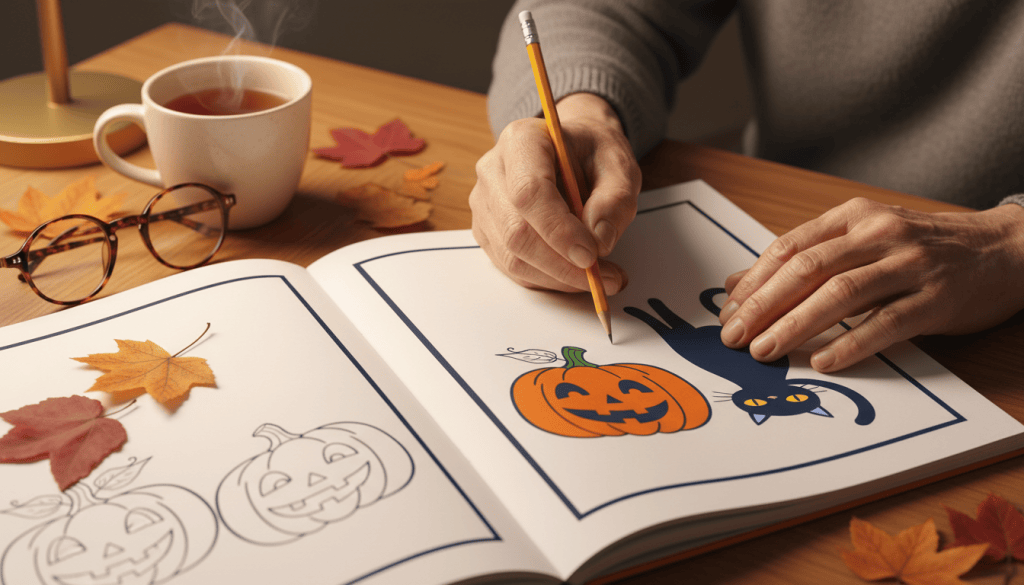
You study a busy Halloween picture for a minute: pumpkins on a porch, a black cat, a witch’s broom leaning by the door. Then you turn the page and answer questions about it. How many pumpkins were there? What was the cat sitting on? It sounds simple until you try it. The good news is that picture recall is a skill, and like any skill, a few simple habits make a big difference.
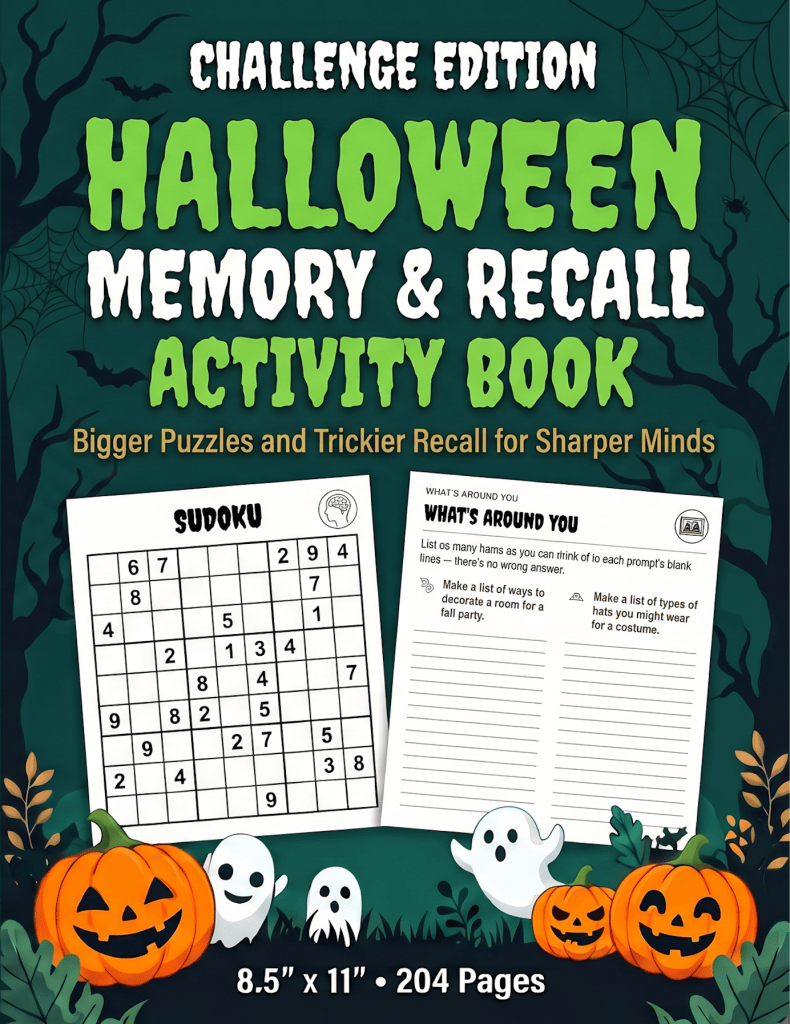
Today we’ll walk through a step-by-step method, using the Halloween Memory & Recall Activity Book, Challenge Edition as our practice ground. The Challenge Edition is built for puzzlers who like a stretch, with longer lists, bigger grids and trickier recall, so it’s a great place to sharpen these skills.
Halloween · Challenge Edition
Halloween Memory & Recall Activity Book
- 150 Halloween memory activities in large print
- Longer lists, bigger grids, trickier recall
- Made for puzzlers who enjoy a stretch
- Free large-print answer guide online
Why picture recall feels hard (and why that’s fine)
When we glance at a picture, our eyes jump around. We notice the big, bright things and skip the small ones. That’s normal. Picture recall puzzles ask you to slow down and notice on purpose. Researchers who study attention and memory have found that we tend to remember more when we actively work with information, by naming it, sorting it or connecting it to something we already know, than when we simply look at it. The steps below put that idea to work.
The 5-step method
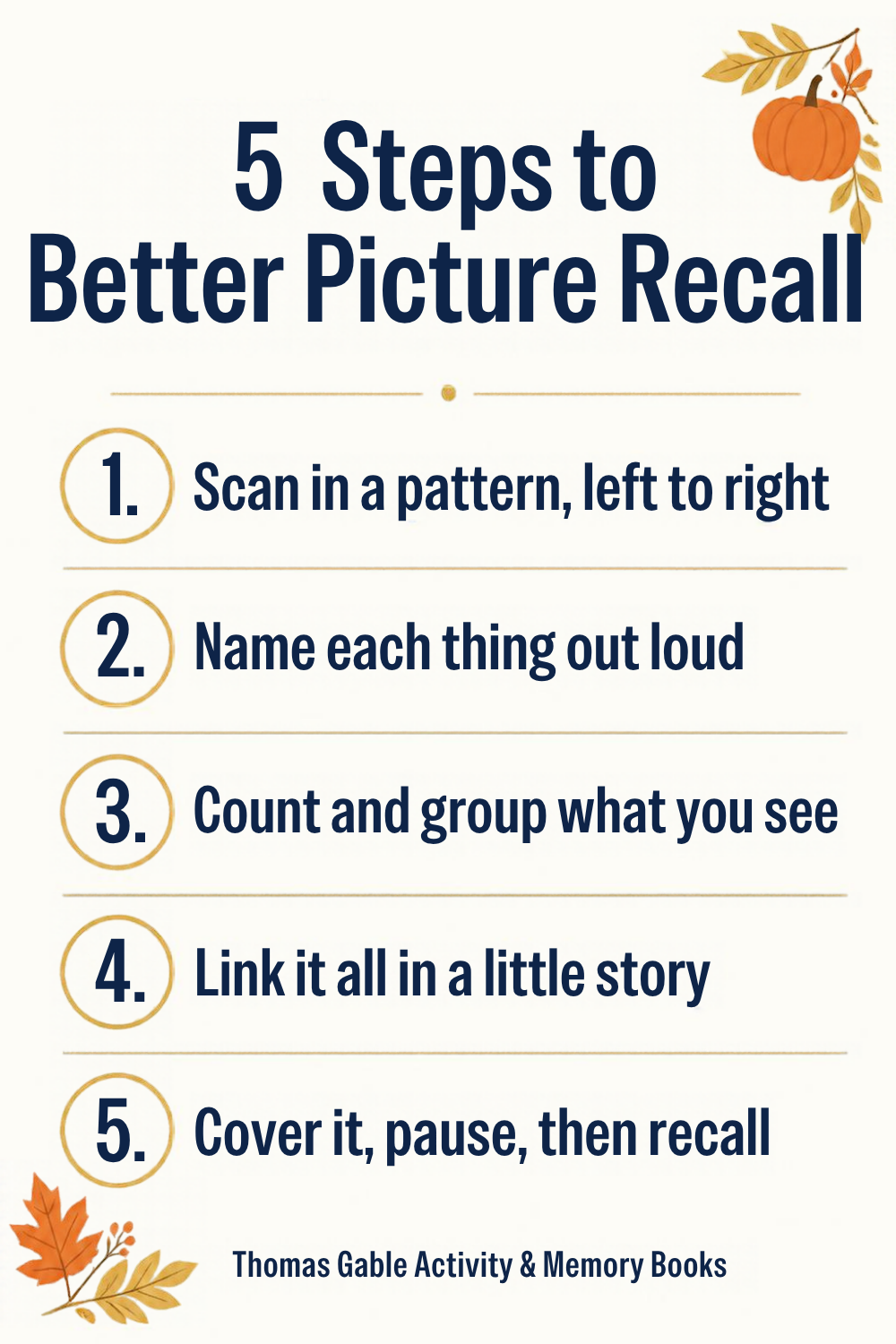
- Scan in a pattern. Read the picture like a page of a book: top left to top right, then down a row. A steady pattern keeps you from missing the corners.
- Name each thing out loud. “Pumpkin, pumpkin, cat, broom, lantern.” Saying it uses your voice and your ears as well as your eyes, which gives the memory more than one way in.
- Count and group. Instead of seven separate items, make small bundles: “three pumpkins, two bats, one cat, one broom.” Groups are easier to hold than a long list.
- Link it all in a little story. “The cat sat by three pumpkins while two bats flew over the broom.” Silly stories work best, because they stick.
- Cover it, pause, then recall. Turn the page and take a slow breath before you answer. Replay your story first, then the details.
Track your progress this week
Seeing your own improvement is half the fun. Try one picture recall activity a day and jot down how it went. Here’s a simple tracker you can copy onto a notecard:
| Day | Items in the picture | Items I recalled | Step that helped most |
|---|---|---|---|
| Monday | |||
| Tuesday | |||
| Wednesday | |||
| Thursday | |||
| Friday |
Try this: Before you open the book today, practice on your kitchen counter. Look at it for 30 seconds, using all five steps, then walk into another room and list everything you saw. Go back and check. You may be surprised how much the story step helps.
When it feels too tricky
Make it easier
- Study the picture twice as long
- Focus on just one corner first
- Answer with a partner
Make it harder
- Cut your study time in half
- Wait five minutes before answering
- Recall colors and positions, too
Missing a few details is part of the game, not a sign that something is wrong. Check your answers in the free answer guide, notice what you missed, and try again tomorrow. If you ever have real concerns about your memory, that’s a good conversation to have with your doctor.
Ready for Halloween?
Halloween is just days away, which makes this the perfect week to put your new skills to work. Grab a pencil, a cup of something warm and the Challenge Edition, and see how many pumpkins you can remember. Want a calmer pace? The Gentle Edition offers simpler puzzles, one activity per page.
From Thomas Gable Activity & Memory Books, an imprint of Ripplebound Publishing
This post is for general interest and isn’t medical advice. As an Amazon Associate I earn from qualifying purchases.

